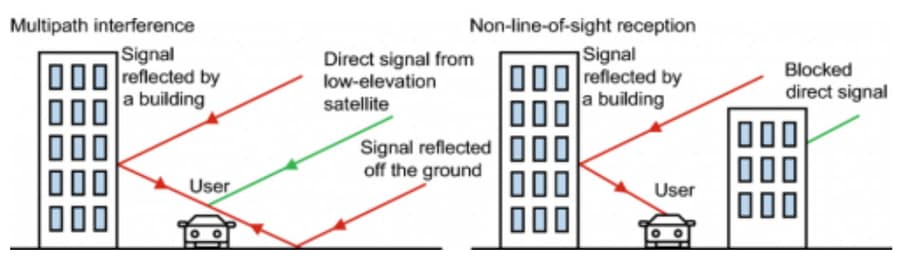
Researchers have introduced an innovative artificial intelligence solution to address persistent Non-Line-of-Sight (NLOS) errors in urban Global Navigation Satellite Systems (GNSS) navigation. The Light Gradient Boosting Machine (LightGBM) model analyzes multiple GNSS signal features to accurately identify and differentiate NLOS errors, representing a critical advancement for urban navigation where accuracy is essential for technologies like autonomous vehicles and intelligent transportation systems.
Published in Satellite Navigation on November 22, 2024, this study details a cutting-edge machine learning approach developed by researchers from Wuhan University, Southeast University, and Baidu. The research, available at https://doi.org/10.1186/s43020-024-00152-7, demonstrates how the LightGBM model effectively detects and excludes NLOS-related inaccuracies through dynamic real-world experiments conducted in Wuhan, China, proving its effectiveness in challenging urban environments.
The method involves using a fisheye camera to label GNSS signals as either Line-of-Sight (LOS) or NLOS based on satellite visibility. Researchers analyzed multiple signal features including signal-to-noise ratio, elevation angle, pseudorange consistency, and phase consistency. By identifying correlations between these features and signal types, the LightGBM model achieved an impressive 92% accuracy in distinguishing between LOS and NLOS signals, outperforming traditional methods like XGBoost in both accuracy and computational efficiency.
Dr. Xiaohong Zhang, the lead researcher, emphasized that this method represents a major leap forward in enhancing GNSS positioning in urban environments. The research shows that excluding NLOS signals from GNSS solutions can lead to substantial improvements in positioning accuracy, particularly in urban canyons where signal obstructions from tall buildings and other structures are common. This advancement has profound implications for applications requiring reliable navigation, including autonomous driving systems and smart city infrastructure development.
The research holds significant potential for industries dependent on GNSS technology, including autonomous vehicles, drones, and urban planning. By improving the detection and exclusion of NLOS errors, this method enhances the precision of GNSS systems, making navigation safer and more efficient in densely populated urban areas. As cities continue to develop smarter transportation networks, this technological advancement will play a crucial role in supporting next-generation navigation technologies that require real-time, accurate positioning data.