
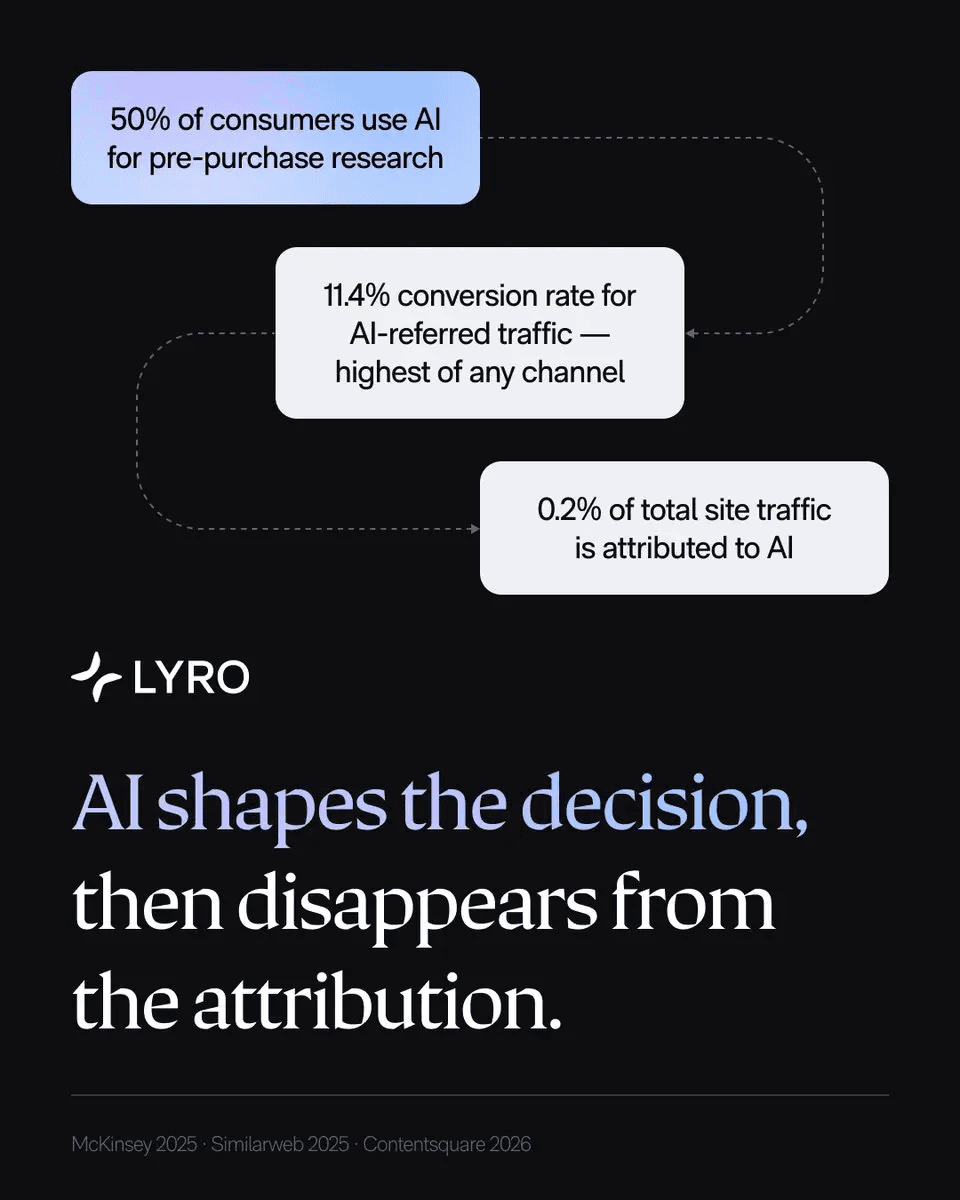
According to a new research report published by Tidio, there exists a substantial gap between consumer reliance on artificial intelligence for product research and the AI-referred traffic measured by current analytics tools. McKinsey research indicates that half of consumers now use AI as their primary or preferred source for product research, while Contentsquare's analysis of actual retail web traffic shows AI-referred sessions at only 0.2% of total visits. Both figures are accurate according to Tidio's findings, and the discrepancy between them represents what the report terms a 'dark AI' gap in current measurement capabilities.
Tidio's research suggests that AI shapes purchase decisions at a scale that current attribution models cannot capture, creating this significant measurement void. While tagged AI referrals represent a small percentage of total traffic, they reflect high-intent visitors from a much larger pool of AI-influenced customer journeys. Similarweb data shows that ChatGPT-referred U.S. retail sessions convert at 11.4%, the highest conversion rate of any measured channel, indicating the quality of traffic coming through AI referrals despite their low volume.
The implications of this measurement gap are substantial for businesses preparing for the future of e-commerce. McKinsey projects that $750 billion in U.S. revenue will flow through AI-powered search by 2028, with brands that fail to prepare risking 20–50% of their traditional search traffic. Morgan Stanley estimates that AI agents will influence $190–$385 billion in U.S. e-commerce spending by 2030. These projections underscore the growing importance of understanding and measuring AI's role in consumer decision-making, even as current analytics struggle to capture its full impact.
The research highlights how AI is reshaping the customer journey in ways that traditional measurement tools cannot fully track. While consumers increasingly turn to AI assistants for product research and recommendations, their subsequent visits to retail websites often appear as direct traffic or through other channels that don't properly attribute the AI influence. This creates challenges for businesses trying to understand their marketing effectiveness and allocate resources appropriately in an increasingly AI-driven commerce landscape.