
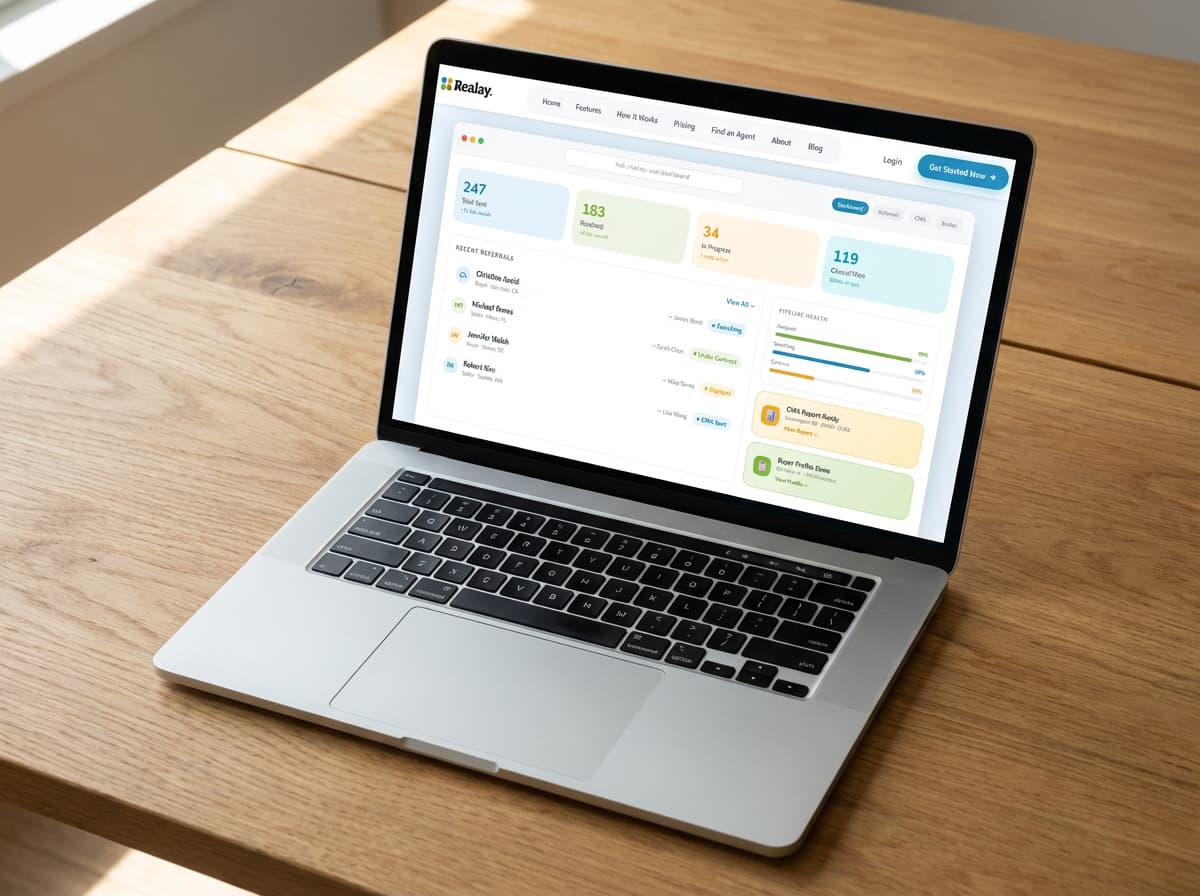
The real estate referral network faces systemic challenges not due to agent effort but because existing infrastructure wasn't designed for independent brokers, creating revenue leaks through missed calls, disjointed tools, and processes reliant on personal memory. A growing number of independent brokers across the U.S. are addressing this gap by fundamentally rethinking how referrals move through their businesses rather than increasing staff or lead spending, with platforms like Realay enabling this transformation.
Responsiveness remains a critical pain point in residential real estate, where mobile agents frequently miss calls from potential clients during showings or meetings. The industry's traditional response of adding more disconnected tools—CRMs, notification apps, and lead capture platforms—has resulted in patchwork subscriptions that increase administrative burden without solving core workflow issues. For independent brokers, this means teams spend more time managing software than cultivating relationships, undermining their competitive advantage of local ownership and personal service.
The shift occurring in forward-looking brokerages involves collapsing multiple functions into integrated workflows where contact management, market analysis, client communication, and referral tracking coexist in a single platform. This integration creates significant efficiency gains, such as generating comparative market analyses in seconds rather than hours, allowing agents to focus on client service and income-generating activities. The same principle applies to contractor referrals, where platforms enable agents to build, organize, and share vetted networks with a single action, fundamentally changing client relationship dynamics.
Practical AI applications are addressing specific problems rather than making broad transformational claims. An AI concierge that engages prospects when agents are unavailable, gathers preferences and context, and delivers complete information for follow-up solves the persistent issue of missed calls from potential buyers. This approach doesn't replace agents but ensures they never start conversations from zero, addressing reasonable skepticism about AI tools that have historically overpromised and underdelivered.
The agent-to-agent referral network represents one of real estate's most underleveraged assets, with brokers constantly generating referrals for colleagues in other markets or clients relocating across state lines. Without structured, trackable systems, these referrals depend on personal relationships and individual memory, leading to inconsistent follow-through. When data becomes visible through dashboards showing active referrals, client search status, and pipeline positions, engagement rates around 81% demonstrate how accountability transforms referral dynamics.
Independent brokers compete not by mimicking national franchises' brand recognition or training infrastructure but by leveraging their strengths in local ownership, genuine relationships, and decisive client service. The operational challenge has been matching this personal approach with scalable tools. Successful brokers are closing this gap by building systems that enhance what they already do well rather than becoming something they're not, creating referral networks built around real clients, relationships, and follow-through rather than cold lead databases.