
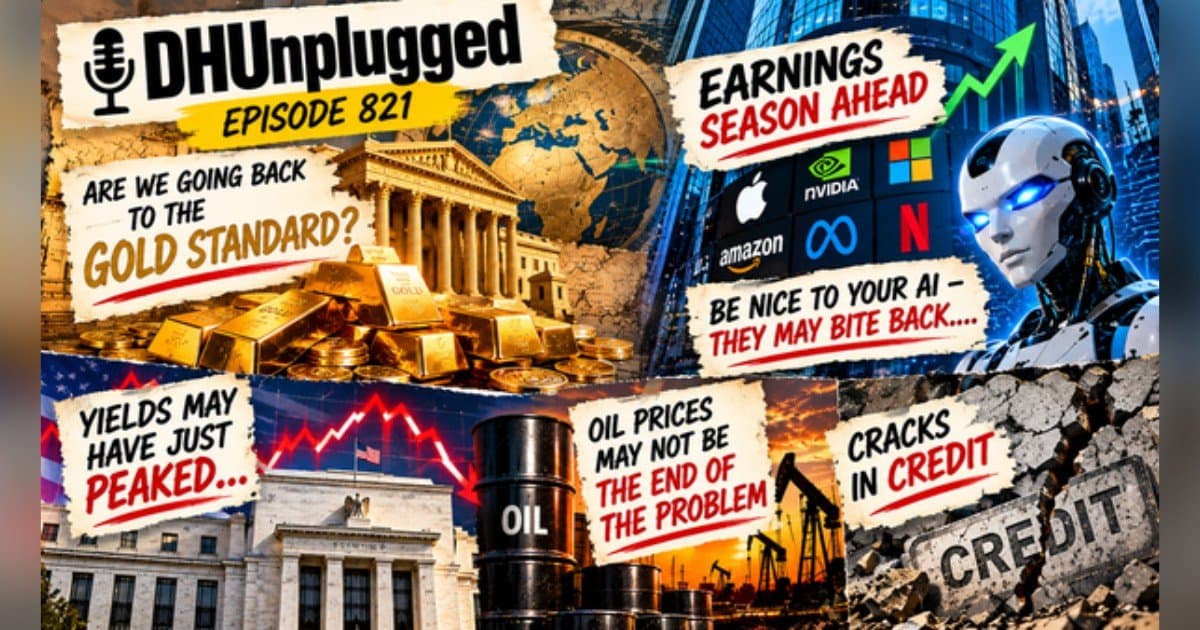
The appointment of Judy Shelton as a counselor to Treasury Secretary Scott Bessant has thrust the gold standard back into the policy conversation, and that alone should make investors sit up. In the latest episode of DH Unplugged, titled Gold Standard Ahead, hosts Andrew Horowitz and John C. Dvorak dig into why this matters: Shelton is a longtime advocate of linking the dollar to gold, and her proximity to the Treasury's levers of power suggests the debate over monetary anchors is no longer fringe.
The timing is loaded. The episode lands as bank earnings season opens, with JPMorgan, Goldman Sachs, Citigroup and Wells Fargo reporting. Bank of America, meanwhile, was hit by a reported $1.5 billion money-laundering fine on the eve of its print, a reminder that compliance risk remains a live threat to earnings. For investors, these results will test whether higher rates have finally translated into wider net interest margins or whether credit deterioration is eating into profits.
Credit markets are already flashing warnings. High-yield bond yields climbed from 7.22% to 8.1% in a month, and CCC spreads blew out by roughly 1,250 basis points. That kind of move typically signals rising default fear, and it arrives alongside a widening U.S. trade deficit and signs of cracking consumer credit. The hosts connect these dots without sugarcoating: if borrowing costs keep climbing for the weakest borrowers, the consumer-led expansion could stall.
Global trade disruptions add another layer. U.S.-to-China tanker bookings reportedly hit $80 million per voyage, adding about $41 per barrel in freight cost alone. That is a direct tax on energy imports and a potential accelerant for inflation. Meanwhile, housing data from Compass shows price reductions on up to 58.9% of listings in Williamson, Texas, versus just 5.6% in San Francisco, a stark illustration of how regional real estate markets are diverging under the weight of higher mortgage rates.
Horowitz reserves particular scorn for Treasury's attempts to cap long-end yields and possibly scrap 20-year auctions, warning that such interventions risk backfiring. "Scott Bessant, if you're listening... please stop because you're messing around with gasoline with a match," he says. Dvorak frames the broader political moment as "the twilight of the optics game," where messaging substitutes for substance. That skepticism is the episode's throughline, and it matters because policy credibility is itself a market input.
The show also explores the collision of AI, labor and software economics. Kroger announced 3,000 corporate layoffs, roughly 30% of its 10,000-person white-collar headcount, targeting finance, supply chain, procurement, real estate and HR. Dvorak, drawing on his Fortune 500 consulting work, pushes back on the AI-productivity narrative, arguing most real savings come from replacing outside firms like PwC and Accenture rather than internal staff. That distinction is crucial for investors assessing which companies will actually benefit from automation.
Other threads include Anthropic's new policy prohibiting "sustained needless cruelty" toward Claude, a French supermarket hack that remotely disabled internet-connected refrigerators, and an open-source tool, Reverse Engineer Anything, which spawned Slowbooks, a free clone of QuickBooks 2003. Anduril's planned $3.7 billion Maryland shipyard for Virginia-class submarine components, Broadcom's $42 billion customer-financing program, and Apple's LG-built smart-home push round out the tech beat.
For self-directed investors, the episode's value lies in connecting policy signals to market plumbing. Shelton's rise, the gold-standard chatter, bank earnings, and credit stress are not isolated stories; they form a coherent picture of an economy navigating higher rates, political pressure, and technological disruption. Missing that bigger picture could mean missing the next turn.