
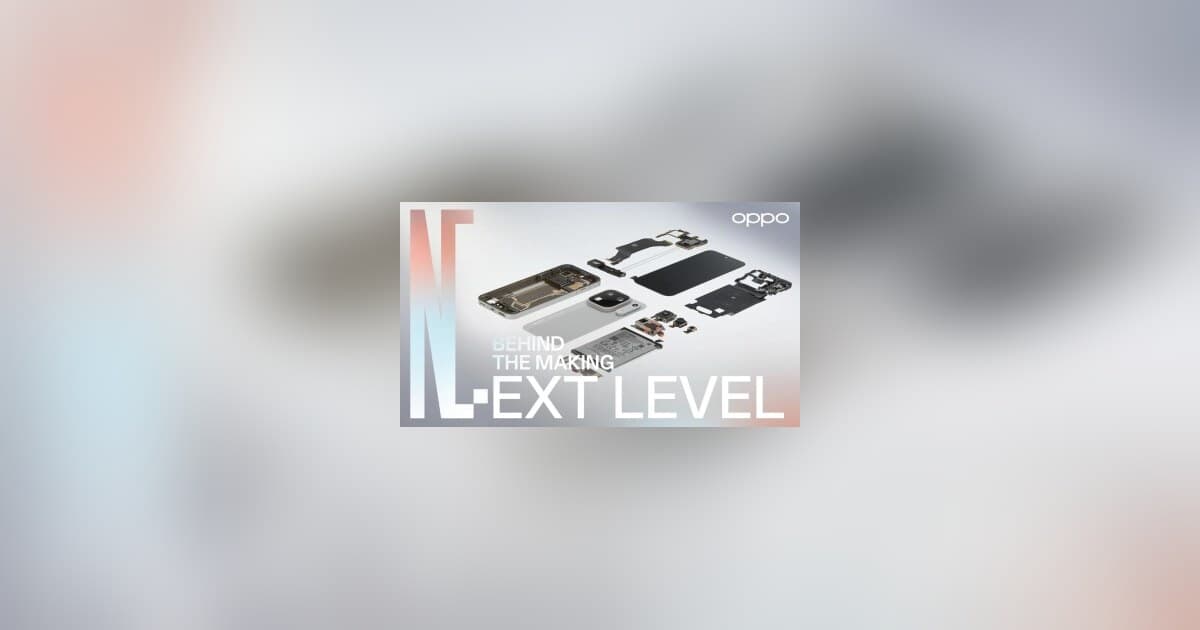
OPPO has offered an inside look at the development, testing, and manufacturing behind its Find X10 Series, revealing an integrated approach that spans industrial design, mobile imaging, artificial intelligence, and large-scale production. The media tour, reported via Media OutReach Newswire, follows the global debut of the flagship lineup, which includes the Find X10 Pro Max with an industry-first Triple 200MP Camera System, the next-generation LUMO True Image Engine, a new design language, and AI-powered ColorOS 17.
The significance of the announcement lies in OPPO's decision to expose its internal processes, a move that positions quality control and manufacturing precision as competitive differentiators. "Quality is the foundation of OPPO's entire product portfolio, and our control over the product creation process is what allows us to realize this commitment at scale," said Ling Liu, Overseas CMO of OPPO. The company is framing this transparency as an evolution of its Apex Guard quality initiative introduced last year.
Design details illustrate the level of refinement OPPO is emphasizing. The Find X10 Series features a One-Piece Sculpted Glass design with a gradual rise toward the camera module, while the Luna White edition adds a fluted texture inspired by classic camera focus rings and a two-tone woven pattern within matte glass. OPPO says the Luna White colorway alone required over 40 rounds of fine-tuning, and each rear-panel pattern needs more than 10 rounds of multi-stage precision treatments.
On imaging, OPPO continues its Hasselblad co-development with three modes—Master, Hi-Res, and Portrait—supported by the LUMO True Image Engine. The company evaluates image quality across 40 lighting conditions for HDR and skin-tone performance and tests against 140 colors rather than the industry-standard 24-color chart. Real-world simulations include a dedicated concert stage setup and multi-axis robotic arms to assess stabilization, underscoring an effort to validate camera performance beyond laboratory metrics.
AI capabilities in ColorOS 17 are backed by a global computing infrastructure of nine Internet Data Centers across six regions, operating with 99.99% availability. OPPO also highlights its AI Security Framework and a Private Computing Cloud developed with Google, addressing growing regulatory and consumer concerns about data privacy in AI features.
Manufacturing scale further supports the strategy. OPPO operates nine smart manufacturing centers across China, India, Indonesia, Egypt, Turkey, Brazil, Pakistan, and Bangladesh, with over 95% of Surface Mount Technology lines and an average of 85% of final assembly lines fully automated. The Chang'an Intelligent Manufacturing Center in China uses more than 300 automated testing stations and can ship up to 7,200 finished Find X10 Pro Max devices daily.
Collectively, these disclosures signal OPPO's intent to compete not only on specifications but on verifiable process quality and global production consistency, areas that increasingly influence consumer trust in premium smartphones.
